NAVER LABS Europe hosted the 4th AI for Robotics workshop from November 20th to 21st. A global event that brings together leading scholars from around the world to discuss the future of robotics and AI, this year’s theme was Spatial AI.
Spatial AI is a technology that bridges the physical and virtual worlds. It enables robots to understand their surroundings in 3D, interpreting the positions, movements, and relationships of people and objects to make more accurate decisions and perform appropriate actions across a variety of real-world situations. With more than 150 researchers from 26 countries in attendance—including Professor Andrew Davison of Imperial College London, who first introduced the concept of Spatial AI—workshop participants shared the latest research aimed at advancing robotic perception, decision-making, and behavior.
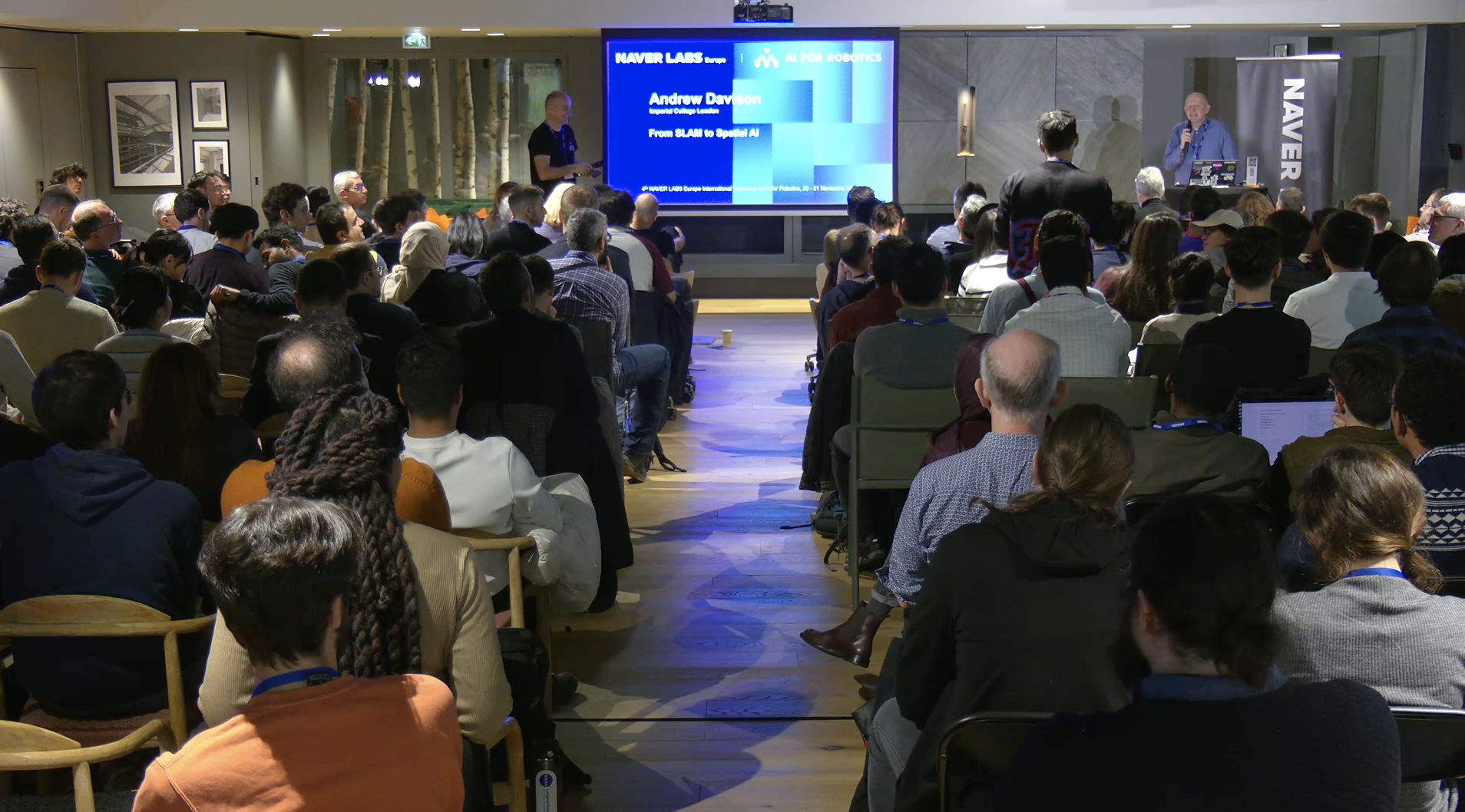
Martin Humenberger, Head of NAVER LABS Europe, introduced Spatial-AI-based technologies designed to be easily usable in real environments, even by non-experts, through the development of new foundation models and the improvement and integration of existing ones. He also presented Anny, NAVER LABS Europe’s recently open-sourced 3D human body model, highlighting how NAVER LABS continues to expand its AI research to help robots better understand humans.
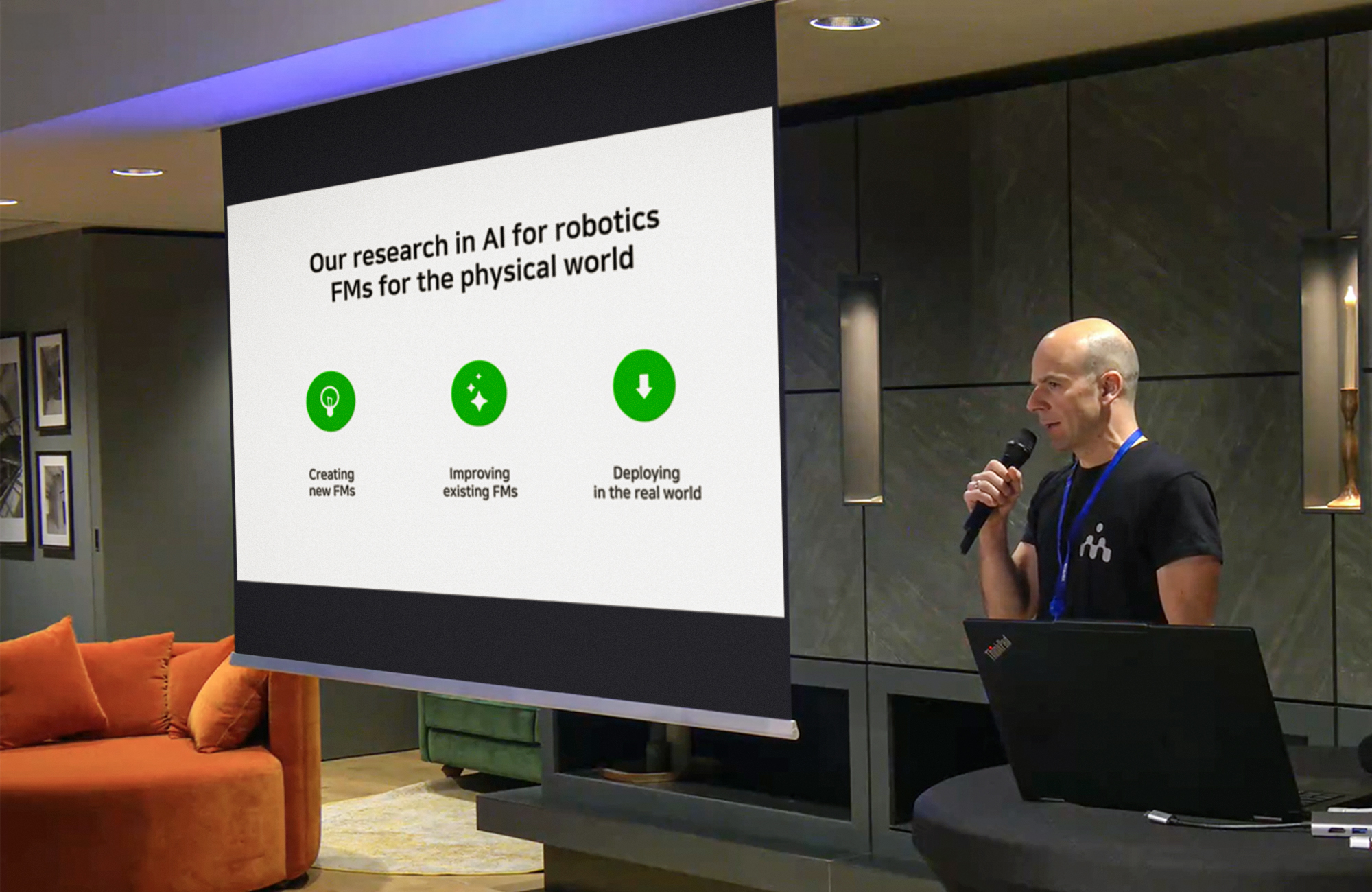
Since 2021, NAVER LABS has shifted its core robotics projects, Vision, Action, and Interaction, toward a foundation model centric approach. The company is now conducting research on a Universal Foundation Model that integrates multiple foundation models into one, establishing a new direction for robotics technology.
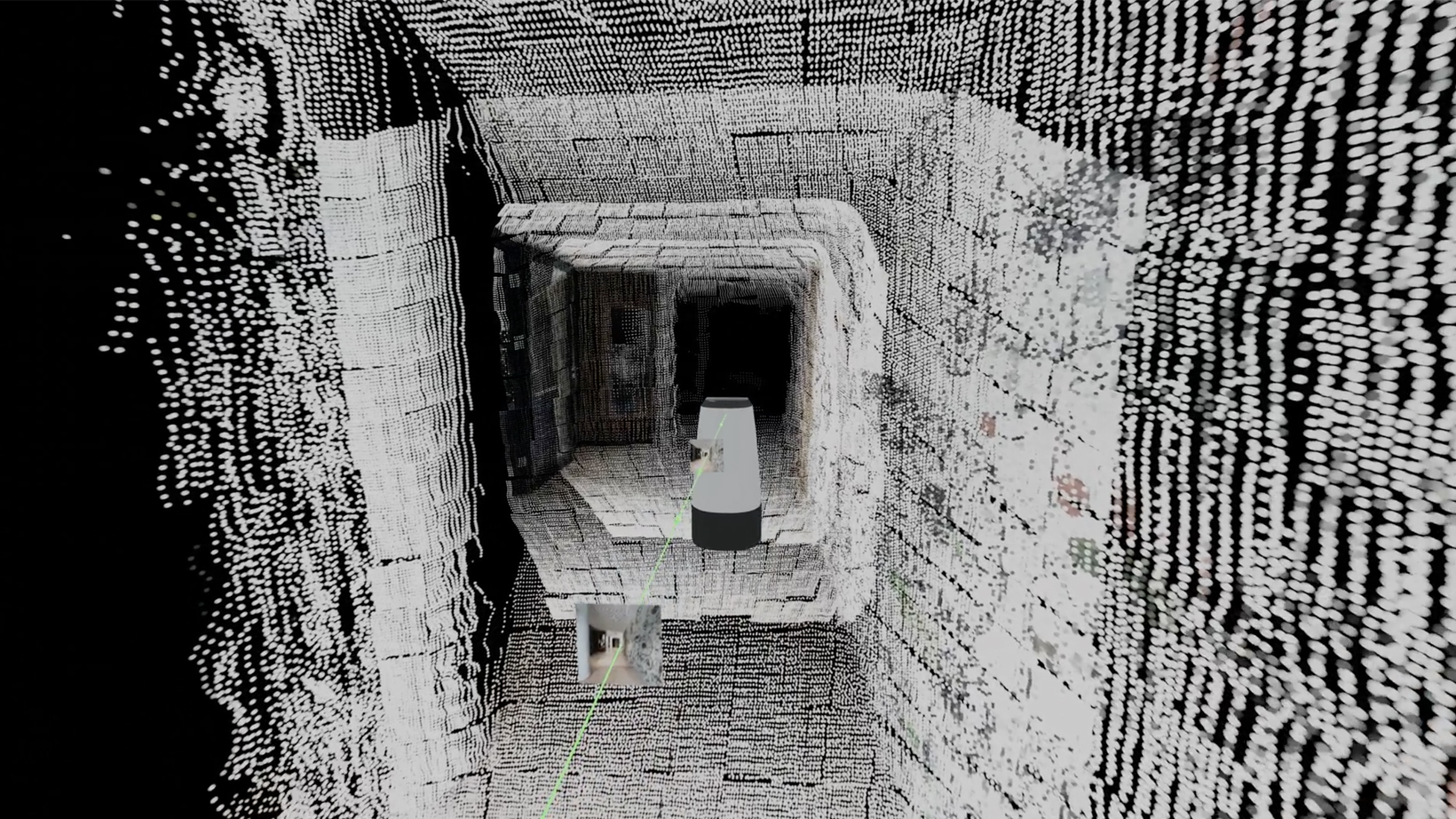
Donghwan Lee, Head of NAVER LABS’ Vision Group, explained that since 2016, NAVER LABS has validated key technologies such as digital twins, VL, and robot autonomous navigation in both indoor and outdoor environments based on its research in spatial intelligence and physical intelligence. Lee introduced DUSt3R-2, a 3D vision foundation model that reconstructs images into 3D spaces, and shared how NAVER LABS has expanded its application areas through various services and testbeds to build the foundation for robots to make decisions and move autonomously in real-world environments.
Leading researchers in robotics and AI also delivered insightful talks. Professor Andrew Davison; Professor Daniel Cremers of the Technical University of Munich; Marc Pollefeys of ETH Zurich and Microsoft; and Cordelia Schmid, Research Director at INRIA and Google, emphasized the importance of specialized hardware for efficient computation and the need for large-scale, high-quality datasets to advance robotics.
Aniruddha Kembhavi of Wayve and Adrien Gaidon of Stanford/Toyota Research Institute shared recent trends in end-to-end autonomous driving and robot manipulation, offering diverse perspectives on the future of AI and robotics.
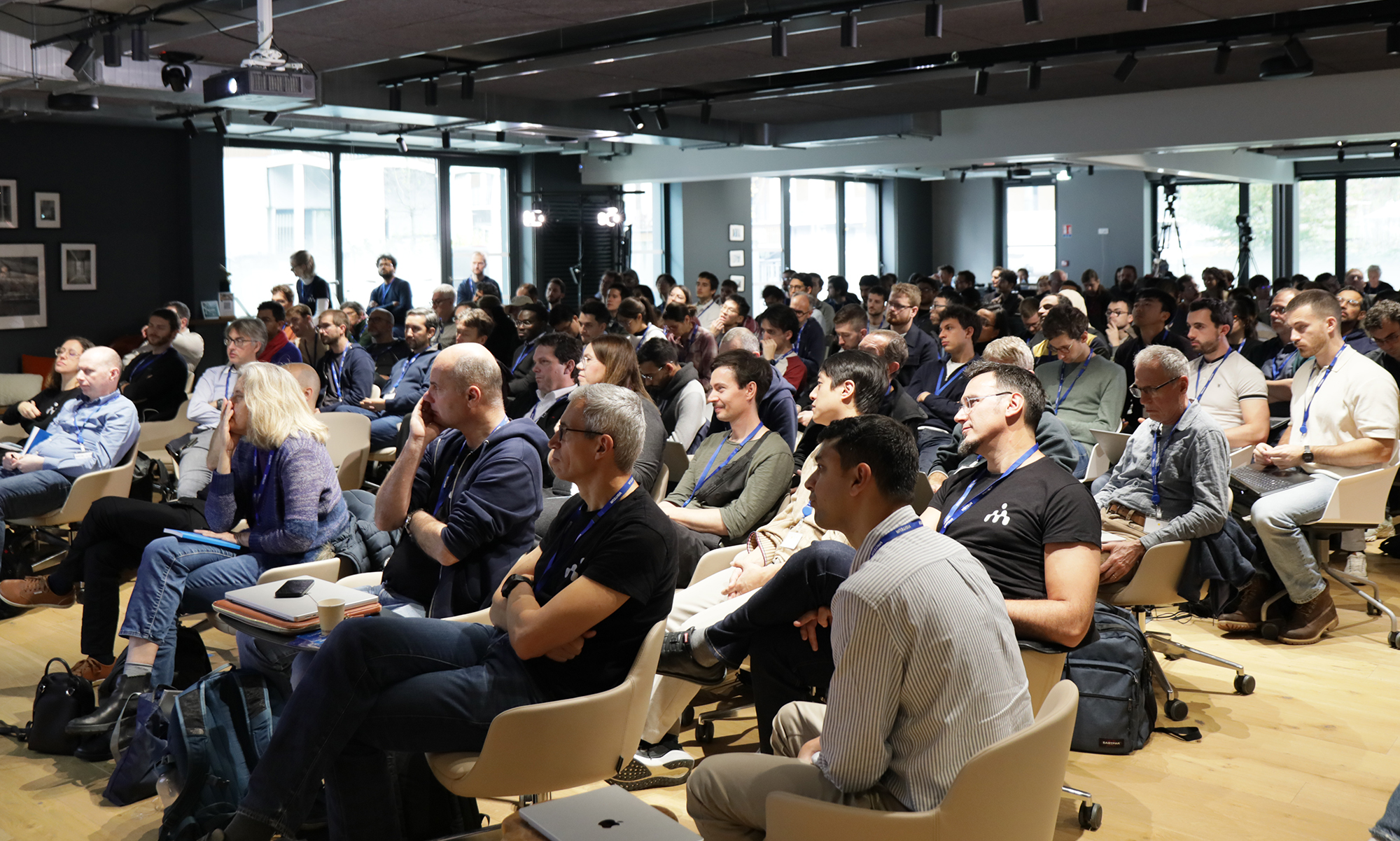
Marking its fourth year, the AI for Robotics workshop has become a forum that transcends the boundaries between academia and industry to envision the future of robot technology. NAVER LABS looks forward to continuing these gatherings with leading researchers worldwide while introducing inspiring research topics, fostering collaboration, and growing together through shared exploration.