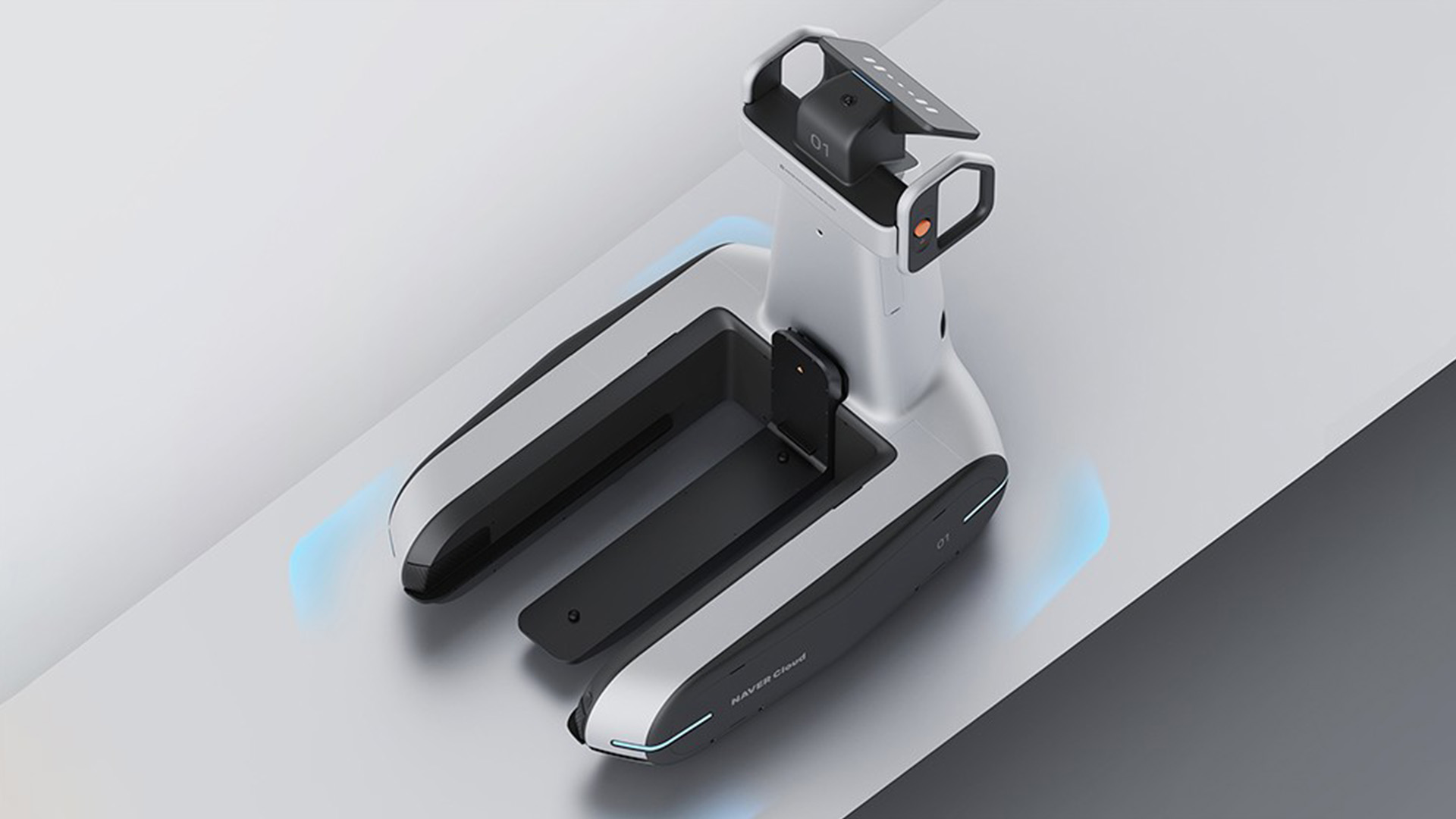
Known for providing flexible support to smart cities and AR/VR/MR services, NAVER Labs' spatial intelligence technology was originally developed with robots in mind. The primary goal of our research was to enable robots to navigate freely in real-world environments by precisely recognizing pedestrians and obstacles. Over time, these technologies have evolved and expanded, finding applications that benefit both people and cities. So, what spatial intelligence technologies does the TwinXR platform provide for robotics?
Mapping for Robots
Digital twin technology is a prime example. Just as people use map applications to locate places, digital twin technology is used to create specialized maps for robots. The process begins with mapping robots, which generate 3D maps. These maps are then uploaded to the cloud, allowing all robots to share and utilize the same spatial data—a unique and collaborative approach to robotic navigation.
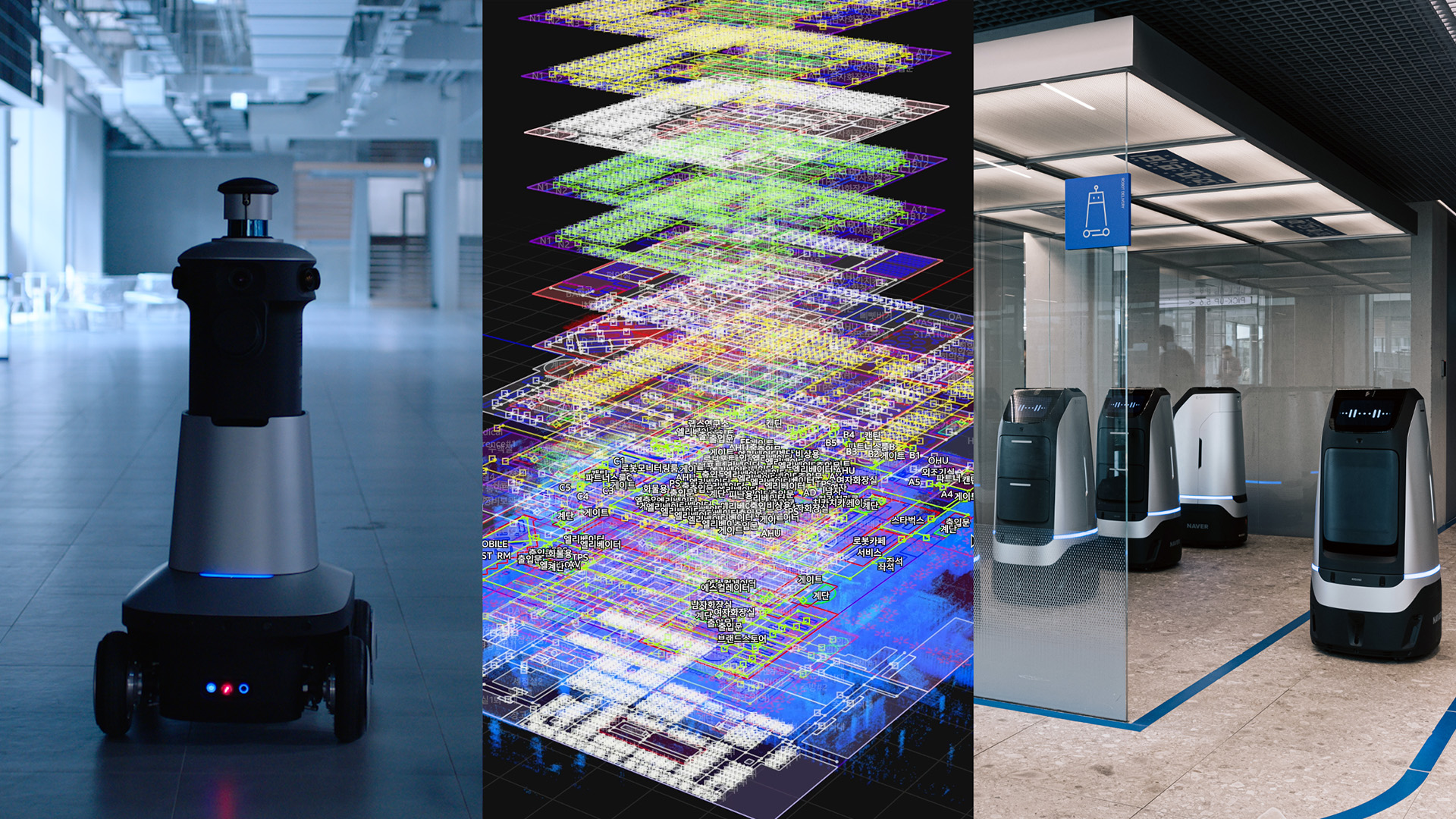
Mapping Robots, Digital Twin (Maps), Service Robots
Localization for Robots
For robots to effectively utilize digital twins, precise localization technology is essential. A robot must accurately determine its current position to plan and execute navigation tasks efficiently.
To achieve this, Visual Localization, a camera-based positioning technology, is employed. Unlike GPS, which doesn’t work indoors, this technology enables fast and accurate localization despite changing lighting conditions (day and night), moving objects, and interior modifications.
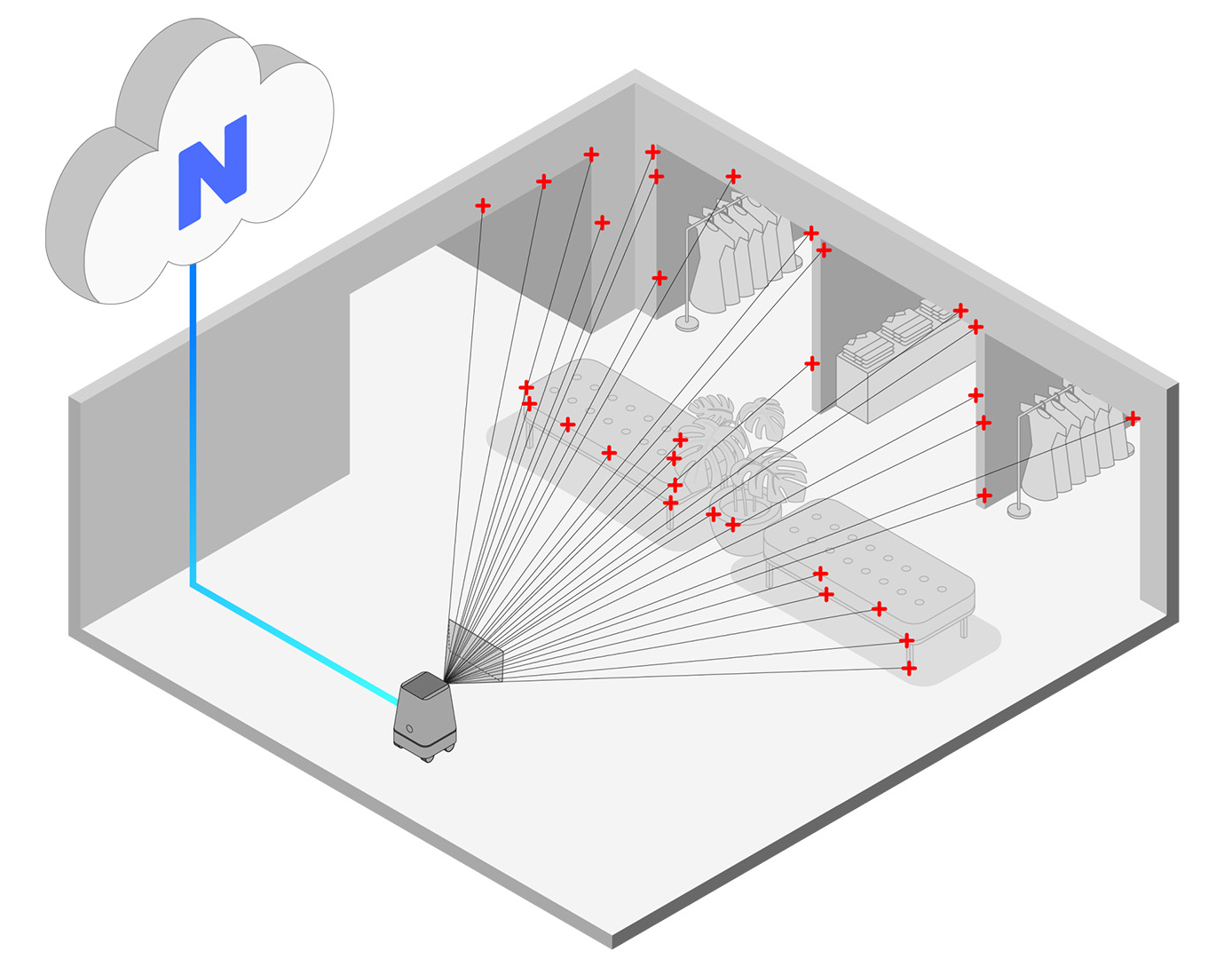
Visual Localization
Simulation for Robots
If we equate the previously introduced technologies to the main game for robots, then simulation is their training ground. Simulation plays a crucial role in enhancing robots’ performance, as it allows testing under diverse and complex scenarios that are difficult to replicate in the real world. A virtual test environment is essential for verifying robot behavior in unpredictable conditions. By leveraging digital twins, developers can create high-fidelity simulation environments that mirror real-world settings, enabling extensive robot service testing and optimization to determine the most efficient solutions.
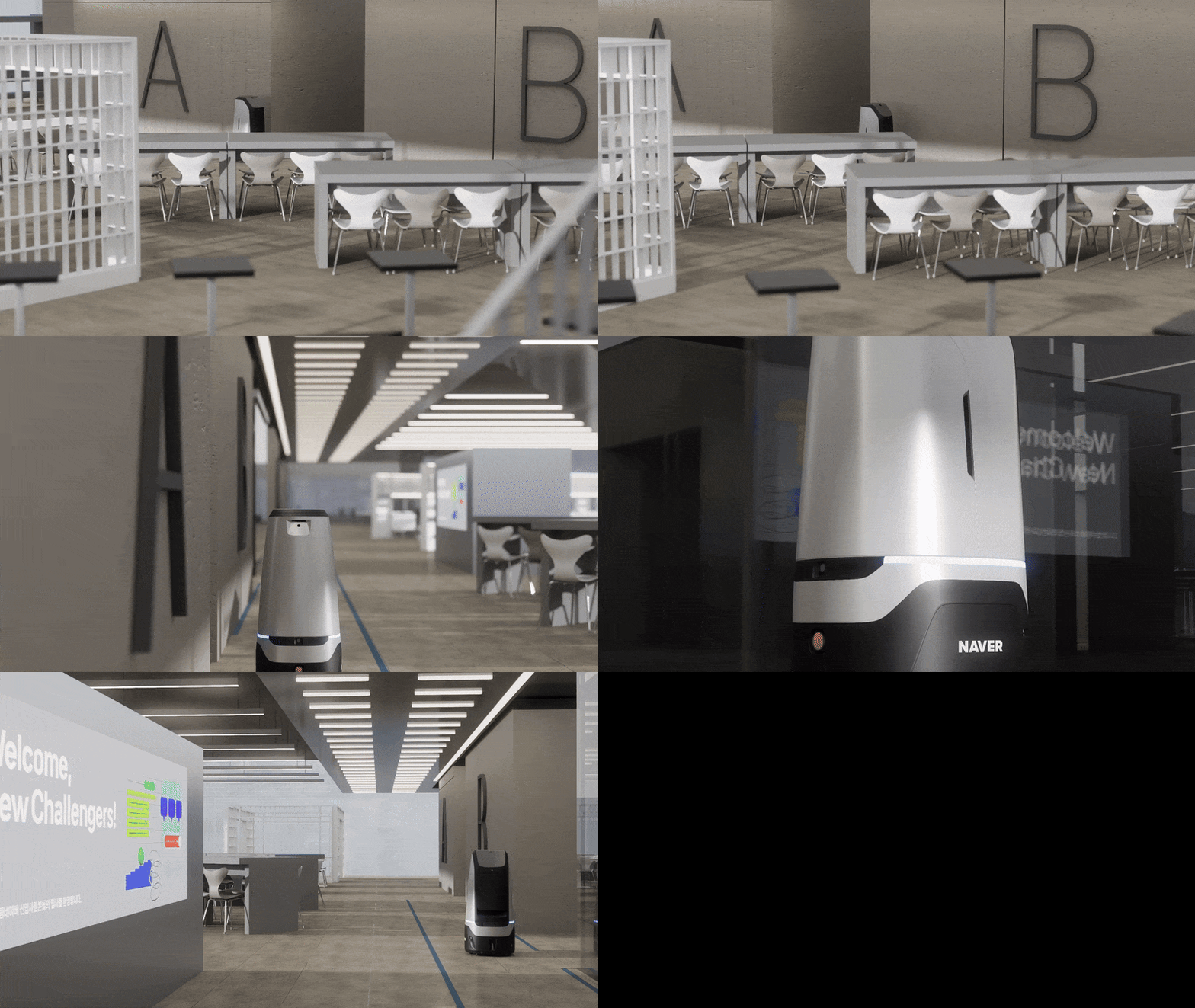
1784 Robot Simulation
The Most Advanced Spatial Intelligence for Robotics
For robots to deliver highly precise services, spatial intelligence software is essential. Given that robots must navigate the physical world while performing tasks, the importance of spatial intelligence and the demand for advanced software solutions will continue to grow in the future.
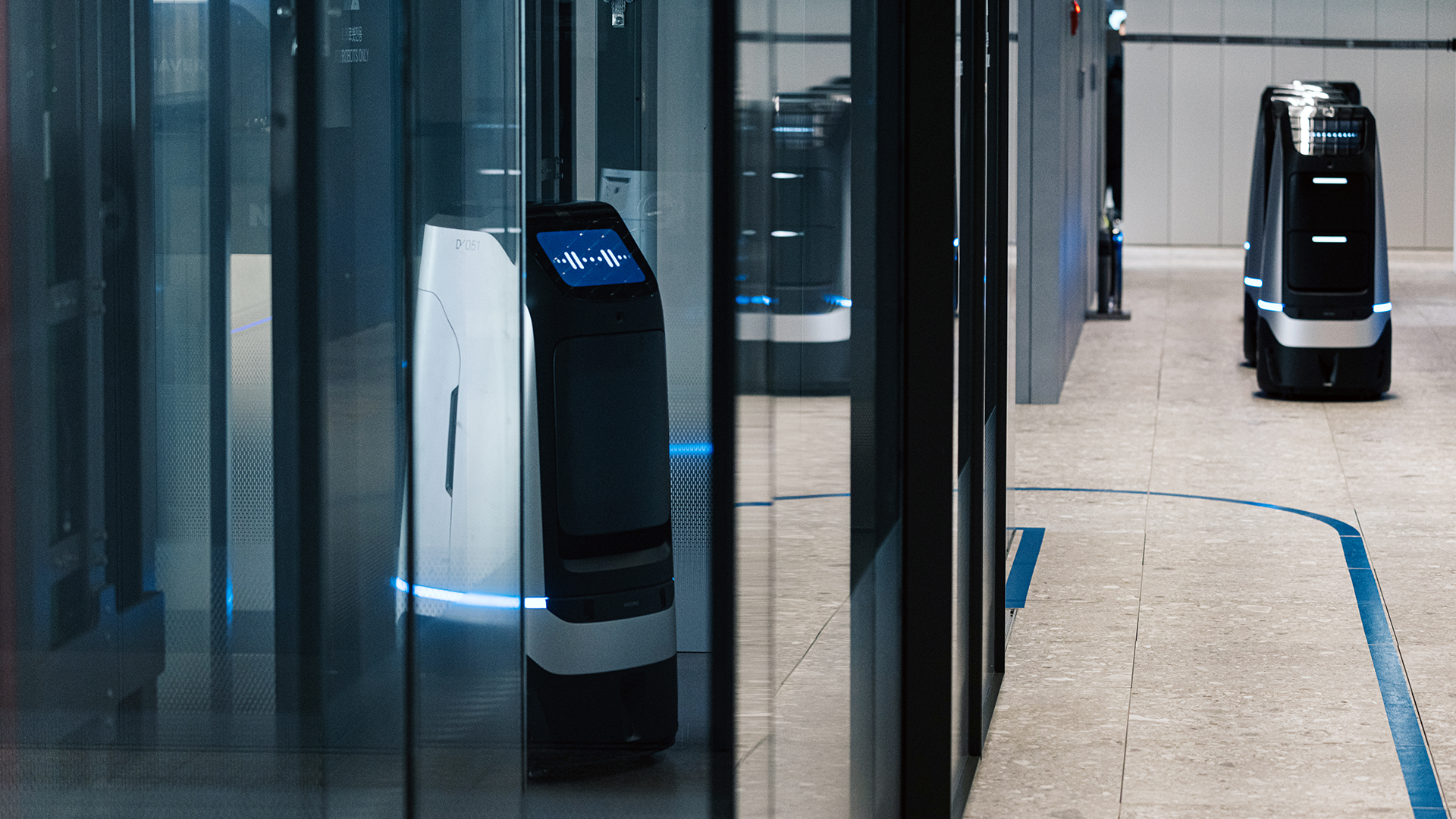
1784 Service Robots
The NAVER TwinXR platform is the definitive solution for robot spatial intelligence. NAVER Labs possesses world-class AI researchers, operates the world’s largest robotics testbed with over 100 service robots, and has accumulated deep expertise and intellectual property (IP) in robotics hardware, software, and service integration.
Read More
NAVER TwinXR: Use Cases for Cities