The key to the AI agent era lies in execution, not decision-making. And robotics is what provides the physical infrastructure that enables execution.
Jongyoon Peck, Robotics Group Lead at NAVER LABS, spoke on “Robotics in the AI Agent Era,” breaking down what it takes for AI to move beyond digital screens and operate in physical spaces.
“In the AI agent era, decisions made online lead to actions in physical spaces. Robots serve as critical infrastructure that enables digital services to be executed in the physical world.”
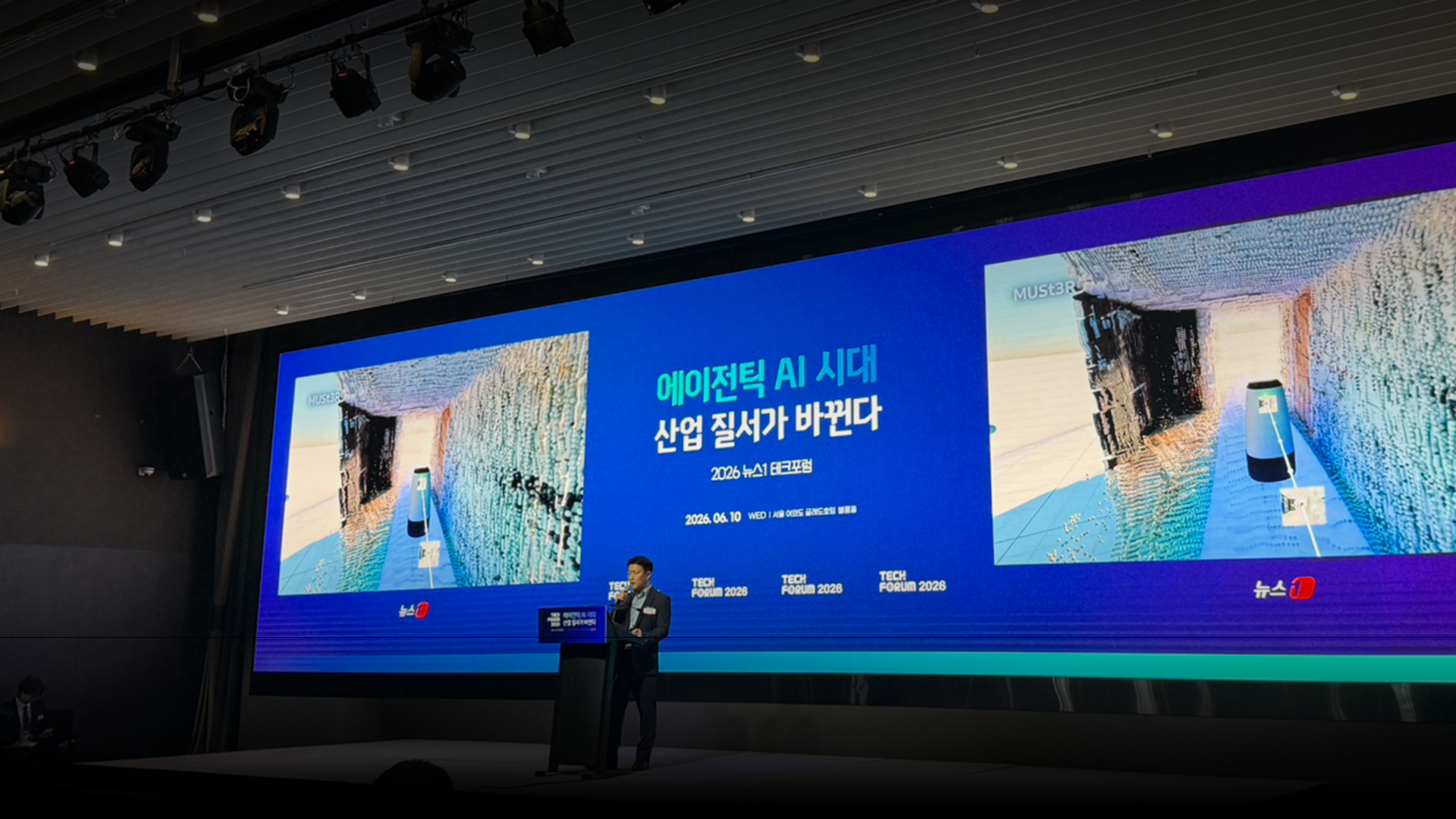
Jongyoon Peck, Group Lead at NAVER LABS, speaking at the Tech Forum
Execution Infrastructure Connecting Robots and AI
Robots should be viewed not as mere machines or standalone services, but as the execution platform for AI agents. For AI agents to carry out their decisions in the physical world, they require physical executors capable of spatial understanding, mobility, and interactions.
Where does NAVER stand? NAVER already operates an ecosystem of online services including maps, messaging, shopping, and payment. By integrating ARC, which connects robots with spatial infrastructure, NAVER is building a complete stack where online services, AI-driven decision-making, and robotic execution come together.
Only when AI, robots, and spatial data are organically connected can AI agents function autonomously in the physical world.
A Boarder, More Diverse Research Landscape
There is still much work to be done, but a single integrated environment matters most. Some barriers cannot be overcome through individual research efforts alone.
NAVER’s second headquarters, 1784, and the GAK Sejong data center have been the first large-scale testbeds to implement and validate this approach. Over the past four years, these environments have brought together digital twins for spatial understanding, cloud-based orchestration of multiple robots, and the integration of online ordering, payment, and delivery services with robotic services in physical spaces.
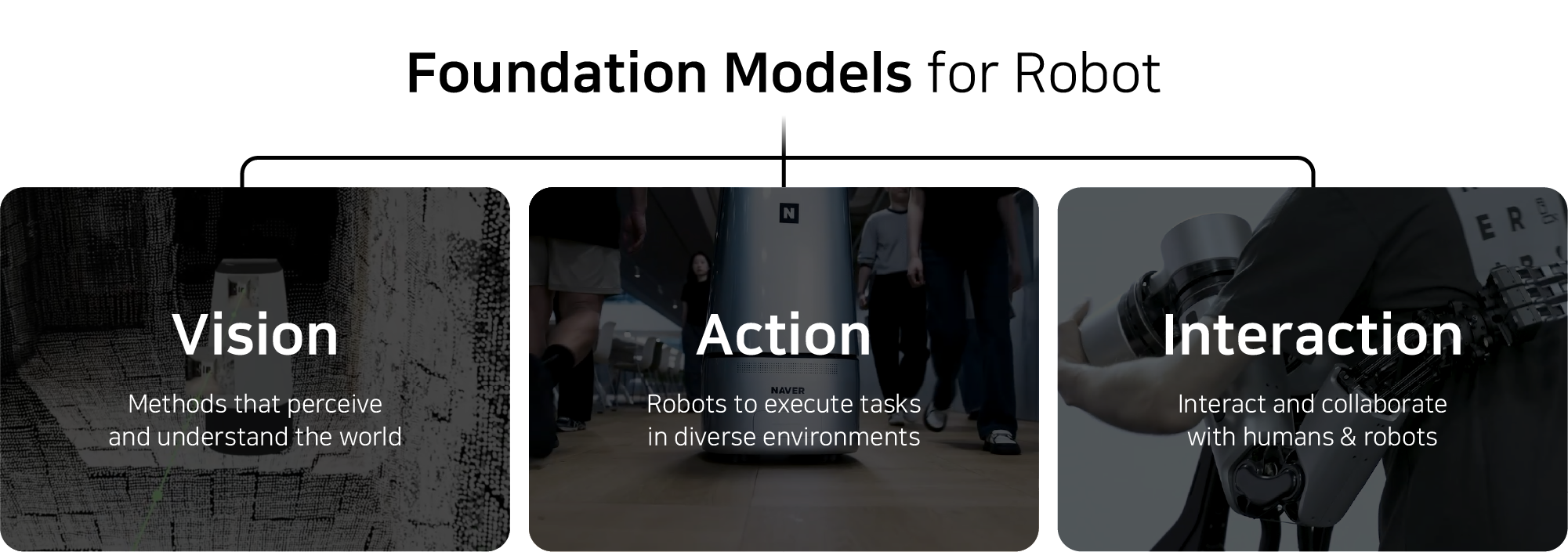
The same approach extends to AI research. Since 2021, NAVER LABS Europe has been developing foundation model-based robotics AI across vision, action, and interaction. These technologies enable robots to perceive complex environments, make context-based behavioral decisions, and communicate naturally with people.
Spaces Robots Understand: From Buildings to Cities
The scope of everyday spaces should also expand. Outdoor environments are significantly more complex than indoor ones. Sidewalks and car-free zones are filled with dynamic elements such as people, bicycles, unexpected obstacles, and construction sites.
Jongyoon illustrated this through Nuri, NAVER LABS’s recently unveiled outdoor delivery robot. Powered by NAVER Maps and ARC, Nuri seamlessly connects outdoor and indoor environments, demonstrating that robot services can extend beyond the boundaries of buildings and into entire cities.
This is where NAVER stands out. NAVER is one of the few companies that connect the extensive ecosystem of online services, including map, messaging, shopping, and payment, with the robotic and spatial infrastructure validated at 1784—all in a single stack. This is NAVER’s most powerful differentiator and competitive edge in the AI agent era.