Foundation models are one of the most well-known methodologies in AI and have recently emerged as one of the most notable approaches. Once trained on vast amounts of data, they possess a versatility and adaptability that allow them to be easily applied to various tasks such as language processing, image generation, and translation.
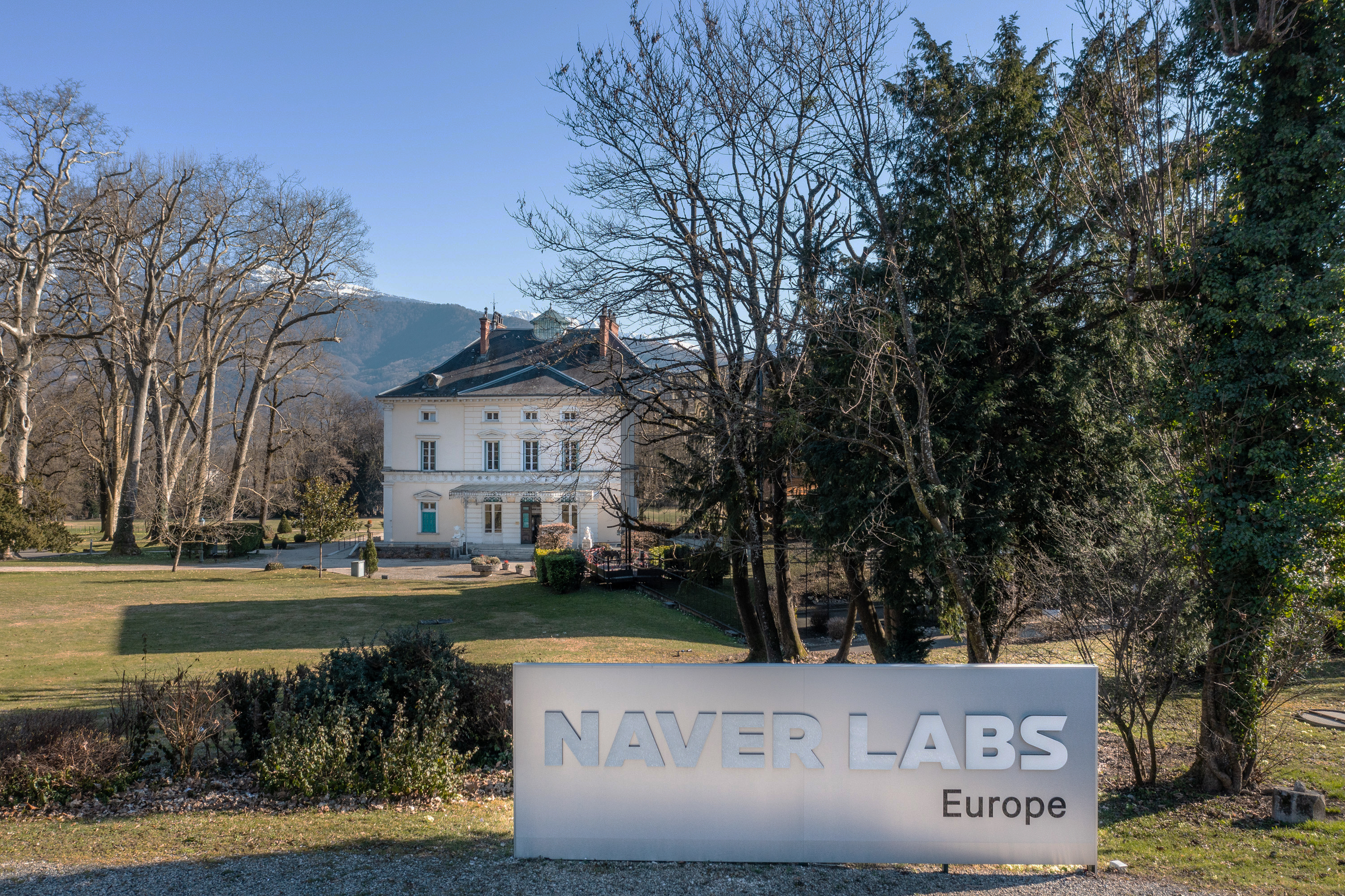
Since 2021, NAVER LABS has been applying foundation models across its entire field of robot AI research, which is likely the earliest such effort among robotics research institutes worldwide. In particular, the company has been exploring and continuously achieving remarkable results with Spatial AI, which enables robots to perceive and interpret spaces, and Physical AI, which allows them to move and interact with humans in physical environments based on foundation models.
Robots That Perceive and Respond to the Real World
Traditionally, developing robots required building complex pipelines for each specific task, such as object recognition, path planning, and control. However, the real world is full of unpredictable variables; relying solely on pre-defined rules makes it difficult for robots to handle every situation, so intelligence that allows them to adapt and respond flexibly is essential.
With the introduction of foundation models, robots are evolving to interpret visual information comprehensively, understand their surroundings, and determine their own goals and actions. It is much like how humans perceive three-dimensional spaces with their eyes and decide where to go. This shift is also transforming research on robot actions and human–robot interaction.
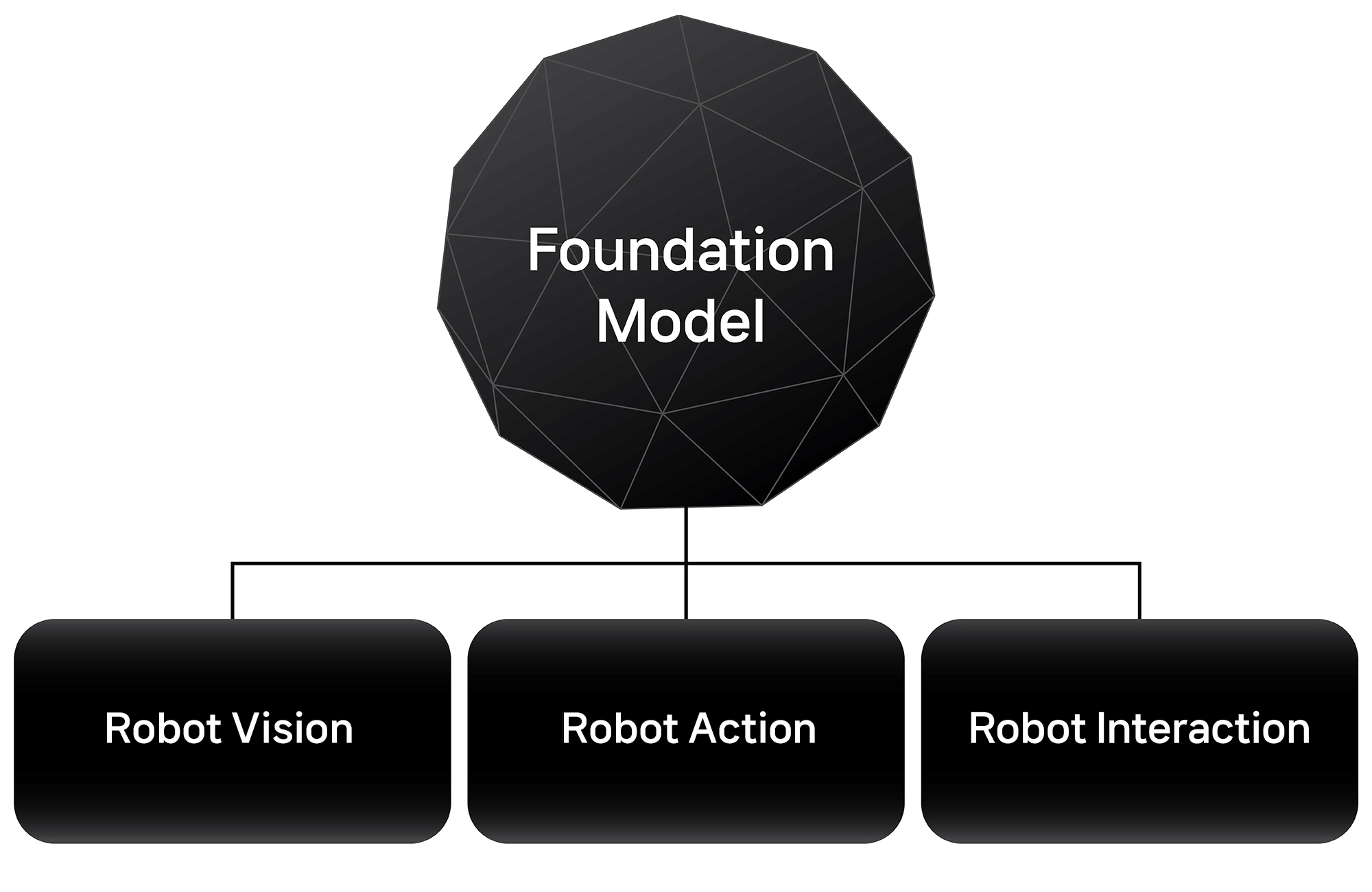
For example, robots can now navigate and move through new environments without pre-made maps. They can also understand human posture and behavior to interact safely. When someone approaches a robot quickly, it no longer simply categorizes the person as a “hazard” or “obstacle”; instead, it can analyze various social cues—such as facial expressions, eye contact, or gestures—to recognize the person as a potential user. Robots are even becoming capable of carrying out complex tasks based on natural language commands. Moreover, as robots increase in number and diversify in form, foundation models provide the versatility and scalability needed to easily adapt to new types of robots.
A major achievement of this technology is DUSt3R, developed by NAVER LABS Europe. DUSt3R is an AI system that precisely reconstructs complex real-world spaces in 3D, enabling robots to understand and make deductions about spatial structures. Thanks to DUSt3R, robots can recognize their surroundings and perform tasks efficiently even in unfamiliar environments. Recognized for introducing a new AI research paradigm, DUSt3R has been cited over 500 times within just a year of its release and has inspired active follow-up studies among global big tech companies.
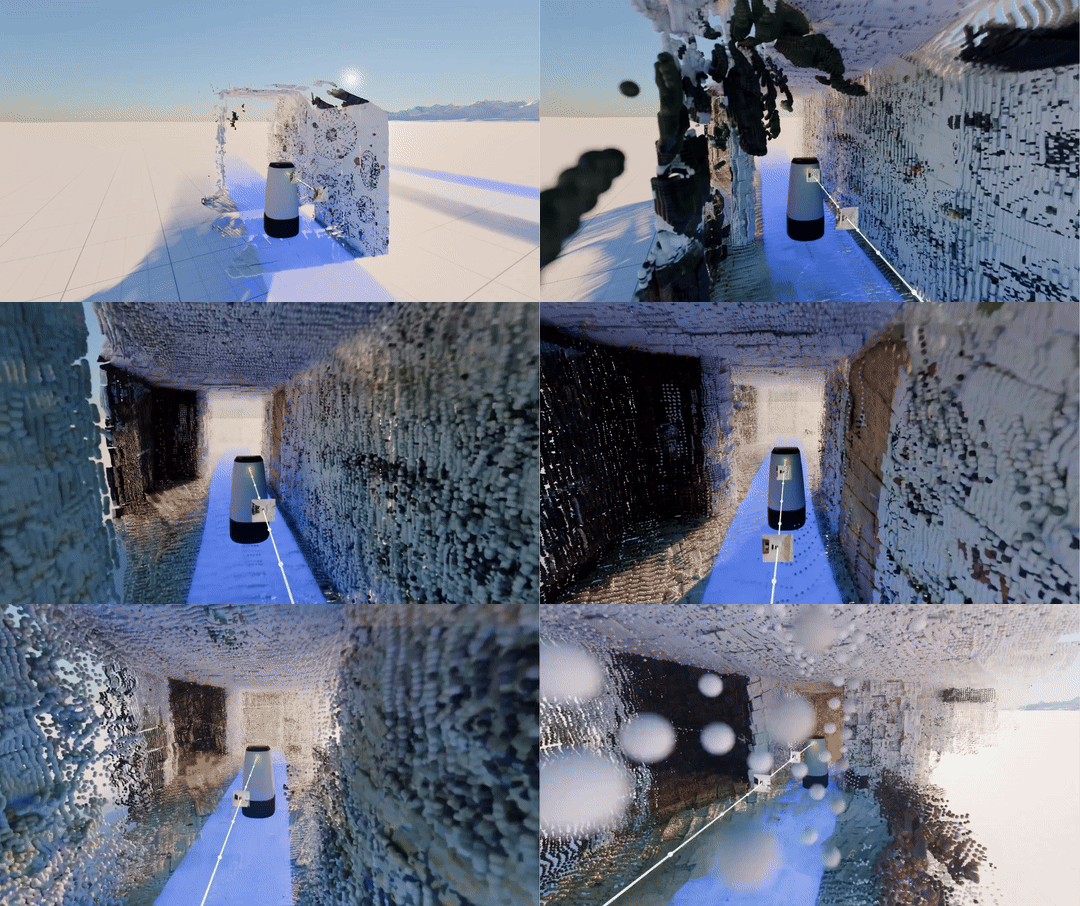
Latest DUSt3R research demo: Real-time 3D reconstruction of spaces from multiple viewpoints.
Robot Intelligence Evolving Through Real-World Data
For robots to gain intelligence, autonomy, and versatility, high-quality data collected from real environments is essential. Laboratory data and synthetic data from simulators still have their limits, as they cannot fully replicate the complexity and unpredictability of the real world, such as a person suddenly blocking a hallway or an unexpected obstacle appearing in the way. By interacting with people and collecting diverse data in real environments, robots can learn how to perceive spaces, understand goals, and respond flexibly.
To achieve this, NAVER LABS tests its robots in real-world spaces where people work and move. The most notable examples are 1784, the world’s first robot-friendly building, and GAK Sejong, Asia’s largest data center. In these environments, more than a hundred robots coexist and perform daily operations alongside humans. Service robots such as Rookie, and operational support robots GaRo, SeRo, and ALT-B, are actively working in real workplace settings.
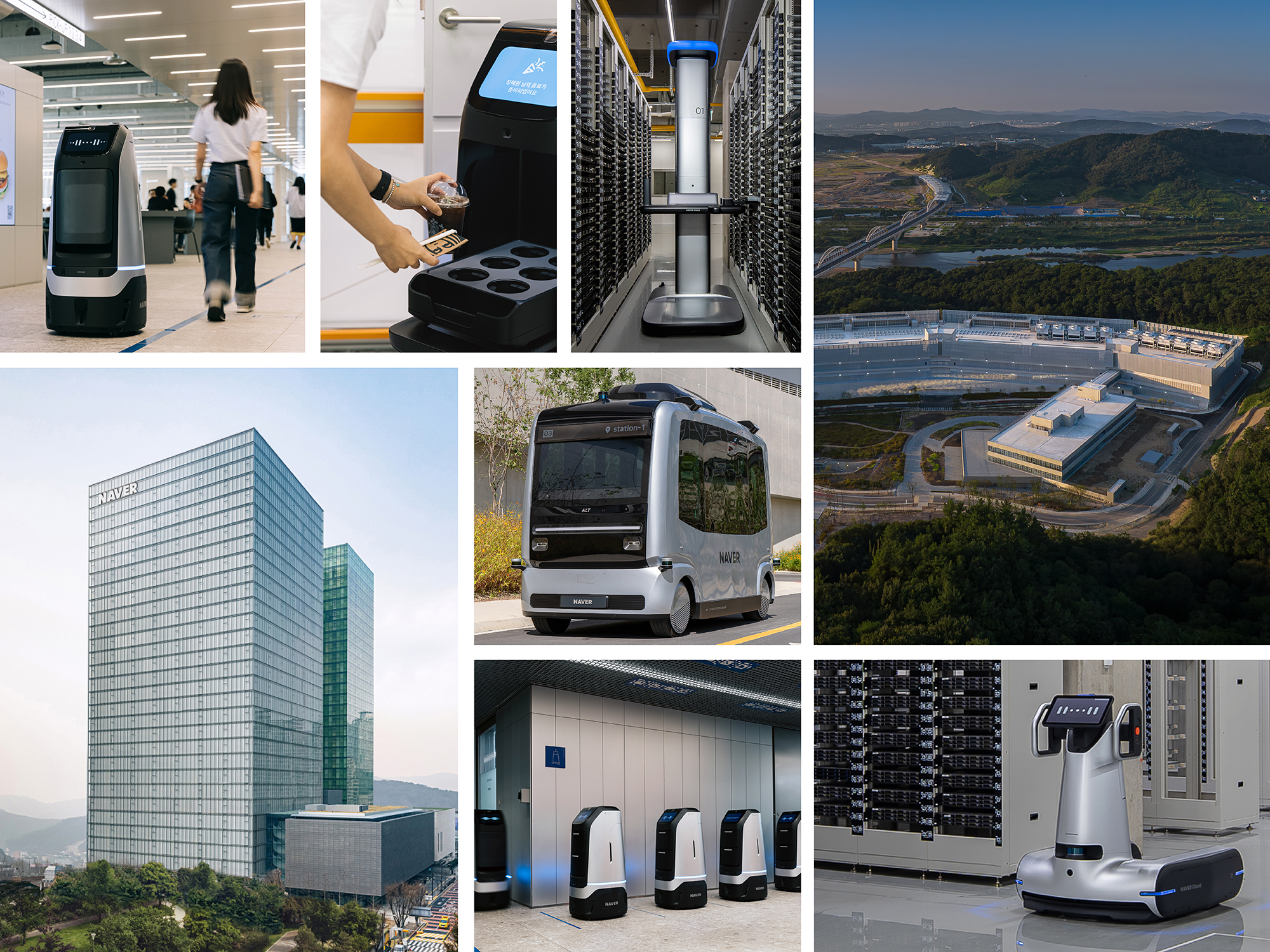
At 1784, robots have performed over 60,000 service tasks to date, accumulating a vast amount of operational data. This real-world data serves as a crucial asset that enables robots to perceive spaces, understand their objectives, and act with flexibility. NAVER LABS is building more than just individual robots; it is creating a robot AI platform that combines foundation model research, real-world data, and an evolving testbed.
Read more: